
As a supplier of PP Food Jars, I often get asked about the break-resistant properties of our products. In this blog post, I'll delve into the science behind polypropylene (PP) and explore whether PP Food Jars are truly break-resistant.
Understanding Polypropylene (PP)
Polypropylene is a thermoplastic polymer that is widely used in various industries, including food packaging. It is known for its excellent chemical resistance, high melting point, and relatively low density. These properties make it an ideal material for food jars, as it can withstand a wide range of temperatures and is resistant to many chemicals commonly found in food products.
One of the key factors that contribute to the break-resistant nature of PP is its molecular structure. PP has a semi-crystalline structure, which means that it consists of both crystalline and amorphous regions. The crystalline regions provide strength and stiffness, while the amorphous regions allow the material to be flexible and absorb impact. This combination of properties gives PP Food Jars the ability to withstand some degree of mechanical stress without breaking.
Testing the Break-Resistance of PP Food Jars
To determine the break-resistant properties of our PP Food Jars, we conduct a series of tests in our laboratory. These tests simulate real-world conditions, such as dropping the jars from different heights and subjecting them to various levels of pressure.
One of the most common tests we perform is the drop test. In this test, we drop the jars from a specific height onto a hard surface and observe whether they break or crack. We repeat this process multiple times with different jars to ensure the accuracy of our results.
Another test we conduct is the pressure test. In this test, we apply a gradually increasing amount of pressure to the jars until they either break or reach their maximum capacity. This test helps us determine the maximum amount of pressure that our jars can withstand without breaking.
Based on our testing, we have found that our PP Food Jars are highly break-resistant. They can withstand drops from moderate heights without breaking, and they can also withstand a significant amount of pressure without cracking. However, it's important to note that the break-resistant properties of our jars can be affected by various factors, such as the thickness of the material, the design of the jar, and the way it is handled.
Factors Affecting the Break-Resistance of PP Food Jars
As mentioned earlier, the break-resistant properties of PP Food Jars can be affected by several factors. Here are some of the key factors that you should consider when choosing a PP Food Jar:
- Thickness of the Material: The thickness of the PP material used in the jar plays a crucial role in its break-resistant properties. Thicker jars are generally more break-resistant than thinner jars, as they can withstand more impact without breaking.
- Design of the Jar: The design of the jar can also affect its break-resistant properties. Jars with a wider base and a narrower neck are generally more stable and less likely to break than jars with a narrow base and a wider neck. Additionally, jars with a smooth surface are less likely to crack than jars with a rough surface.
- Handling and Storage: The way you handle and store your PP Food Jars can also affect their break-resistant properties. Avoid dropping or throwing the jars, and store them in a cool, dry place away from direct sunlight and heat.
Benefits of Using PP Food Jars
In addition to their break-resistant properties, PP Food Jars offer several other benefits that make them a popular choice for food packaging. Here are some of the key benefits of using PP Food Jars:

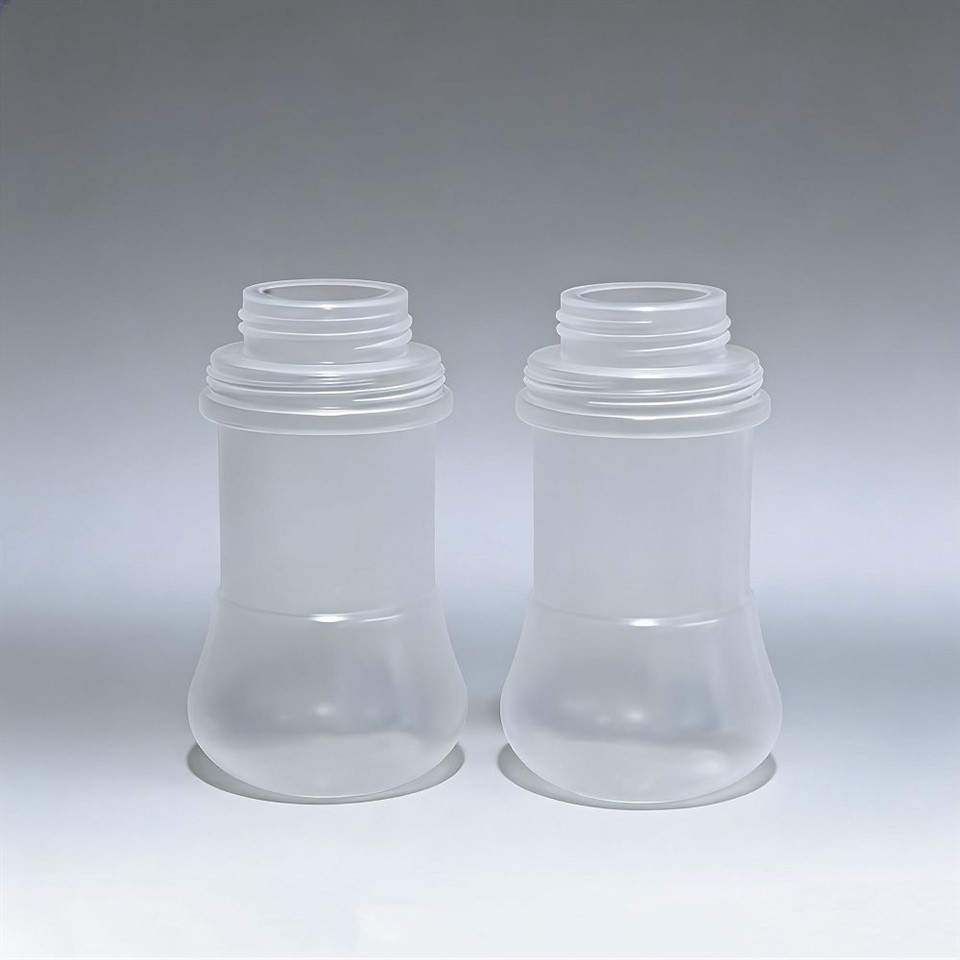
- Food Safety: PP is a food-grade material that is safe for storing food products. It is free from harmful chemicals such as BPA, phthalates, and lead, which makes it a healthy and environmentally friendly choice for food packaging.
- Versatility: PP Food Jars can be used to store a wide range of food products, including dry goods, liquids, and semi-solid foods. They are available in various sizes and shapes, which makes them suitable for different types of food products.
- Cost-Effective: PP Food Jars are relatively inexpensive compared to other types of food packaging materials, such as glass and metal. This makes them a cost-effective choice for businesses that are looking to reduce their packaging costs.
Conclusion
In conclusion, PP Food Jars are highly break-resistant and offer several other benefits that make them a popular choice for food packaging. As a supplier of PP Food Jars, we are committed to providing our customers with high-quality products that meet their needs. If you are interested in purchasing our PP Food Jars or PP Refill Bottles, please contact us to discuss your requirements. We look forward to working with you!
References
- "Polypropylene: Properties, Processing, and Applications." Plastics Technology, 2021.
- "Food Packaging Materials: A Review." Journal of Food Science and Technology, 2019.
- "Testing Methods for Plastic Packaging Materials." ASTM International, 2020.